Welcome to the inaugural edition of the Backlogbook.
At the end of last year, I put together a list of twenty games that I'd like to try and get around to playing in 2026 (that list is available to view on my Backloggd profile, if you'd like to know what's on it). Finishing twenty games in twelve months feels like a fairly achievable number to me; I've rolled credits on between fifteen and twenty different titles every year for the past four years, and I've tried to be sensible and not overload the list with too many lengthy RPGs. That being said, I also know that I'm susceptible to falling off the wagon when it comes to making these sorts of plans. My gaming backlog currently stands over 180 games high, which means there are a lot of other titles besides the ones on my 2026 "to-do" list that are vying for my attention. Not to mention all the games I've already finished, but that I'd like to revisit for another playthrough at some point in the future.
That's where the Backlogbook comes in. Taking inspiration (and its name) from a short-lived weekly blog series I wrote back in 2017, the Backlogbook is intended to be a way for me to check in and take stock of my ongoing efforts to clear my video game backlog. Since weekly updates feel a bit excessive in terms of the time I have available both to play games and to write about them these days, I've decided to commit to one entry every calendar month to begin with, and see how things pan out.
January was a pretty stacked month for me in terms of video games; I ended up playing six different titles, and I have things to say about all of them, so let's get started...
Metroid Prime 4: Beyond
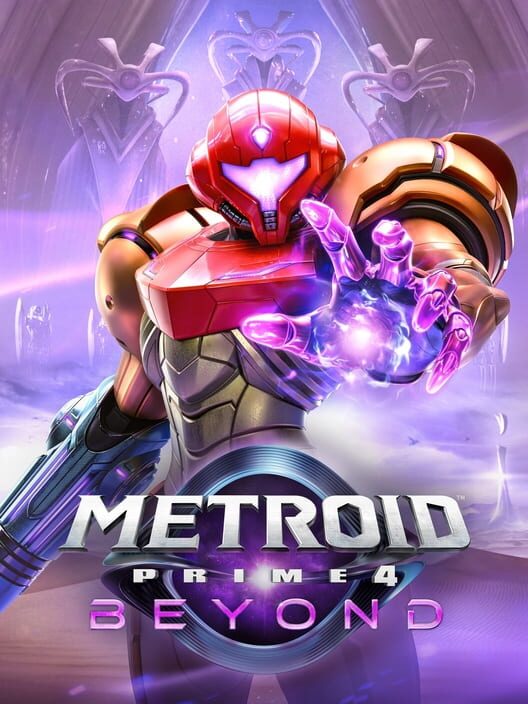
It is with a heavy heart, therefore, when I say I found Metroid Prime 4 to be disappointing. A good game, and even a very enjoyable one at times. But a disappointing one, nonetheless.
Almost all of that disappointment is born from Prime 4's approach to exploration and level design, an approach that is somehow almost completely divorced from how those same things were handled in the original Metroid Prime, despite the core components being nearly identical on the surface. As I've come to expect from a Metroid game, Samus's journey through the alien world of Viewros is gated by various barriers which require new upgrades and abilities in order to unlock. What I didn't expect what just how direct and devoid of exploration that journey would feel. Each of Prime 4's five main areas is less a sprawling region to explore and more reminiscent of a level in a corridor shooter. This linearity makes the game feel more like an archetypal FPS campaign and lacks the sense of exploring the unknown that Dread and (especially) Prime Remastered had conditioned me to expect.
Another big part of what made these aspects of Prime 4 fall so flat for me is how disconnected the world feels. There are no elevators connecting the different biomes to each other in unexpected ways like there were on Tallon IV. Instead, the five themed areas of Viewros are separated from each other by the Sol Valley, a vast desert intended to be traversed via motorcycle. This means that on those occasions where Samus acquires a new upgrade that facilitates exploration in another area rather than the current one, the player needs to return to the central hub and cross an almost empty expanse of sand punctuated by at least two lengthy loading screens to get there. I say "at least two", because there are several instances where rather than heading straight for their next destination, the player first needs to make a pit-stop at base camp in order to have someone convert the item they've picked up into an actually usable ability. All of this only serves to highlight just how compartmentalised the game's level design is, making traversing Viewros feel less like organically exploring an alien planet and more like... well, beating levels in a video game.
The final cardinal sin committed by Metroid Prime 4 that undermines its exploration is its overzealous hint system. Metroid Prime Remastered had a hint system baked into it too, but it was less invasive, being triggered only after about half an hour of gameplay without making progress. It could also be turned off in the game's options menu, which is how I played through the majority of Prime Remastered, only turning it on temporarily twice when I really couldn't see a way forward. By contrast, Prime 4's hints are both constant and unavoidable. At no point did I feel incentivised to explore in search of the critical path, because I'd barely make it back to the Sol Valley before Myles Mackenzie's voice would automatically blare across my radio frequency telling me where to go next. This bypasses organic exploration entirely, and turns a lot of the game's missile and shot expansion upgrades into things you go out of your way for, rather than pleasantly surprising rewards you stumble upon while searching for where to go next.
I don't want to spend the entirety of this write-up bashing Metroid Prime 4, because for as badly as it drops the ball on the exploration component of its gameplay, I think it does everything else really well. The regular combat is solid, and the handful of boss battles that punctuated the game's run time were all enjoyable and distinct enough from one another to be memorable. I particularly appreciated how the properties of the different elemental shots factored into combat, from melting enemies in the Ice Belt with Fire Shot, to freezing flying enemies with Ice Shot and watching them fall out of the sky and shatter on the ground. I enjoyed the core character progression, steadily unlocking new abilities and using them to reach new areas is still satisfying, even if the process has been streamlined. The abilities themselves are mostly returning ones that were familiar to me from Prime Remastered. The main new ability, the Psychic Control Beam, is an interesting addition that I wish had seen more utility over the course of the campaign. Similarly, I enjoyed using the Vi-O-La motorcycle to traverse the Sol Valley and parts of both Volt Forge and Flare Pool, but it would have been nice had there been more to do with it than just smash green crystals in the overworld; maybe a few races, time trials or dedicated combat challenges, if they could be incorporated in a way that didn't harm the lore?
Speaking of which, I found the story to be fine. The inclusion of a squad of Galactic Federation troopers was a little jarring at first, but since the focus here clearly wasn't on creating the feeling of charting a lone course across an unknown alien planet, I don't feel like it hurt the experience as much as some other people have claimed. Sylux was a cool-looking villain that clearly has some history with Samus, but having not played any of the Prime games between the original and this one, I feel like his significance was a little lost on me. Far more interesting to me was uncovering the datalogs and incidental storytelling revealing the history of Viewros, the Lamorn race who inhabited it, and the lengths they went to to try and escape their fate.
From a presentation standpoint, I don't think I've ever played a game on Switch that was this impressive. The aforementioned loading times aside, Metroid Prime 4 is a technical marvel, with gorgeous visuals and flawlessly smooth performance that belie the near-decade-old hardware it's running on. I spent most of my playthrough in handheld mode and have zero complaints about any aspect of the game's visual presentation. The soundtrack does a great job of creating an appropriate atmosphere in each of the distinct areas of Viewros, from the natural mysticism of Fury Green to the industrial drones of Volt Forge, and all the combat and boss themes are suitably adrenaline-pumping.
It feels unfair to judge a piece of media based on what it isn't. Metroid Prime 4, for all the questionable design choices made over the course of its lengthy and presumably troubled development, is not a bad game. Its biggest sin is simply that it is not the original Metroid Prime, a game that felt as fresh and exciting to me in 2024 as I imagine it must have felt to those who played it on the GameCube two decades prior. Some of the fault probably with me here. I've never played Prime 2 or 3, so I'm not sure whether they sit closer to the original game or Prime 4 in terms of their design philosophies, but maybe if I had then I wouldn't have felt this burned by Samus's latest adventure. At this point, I would definitely play a hypothetical Metroid Prime 5, but I'd go in with far more tempered expectations.
Cricket 24

There were four Sundays in January, which means I played four matches throughout the month. All four of those matches were for Essex; two were in the four-day county championship, and two were in the one-day plate. The two four-day matches were both fairly hefty losses, one to Middlesex by 231 runs, and the other to Surrey by five wickets. We fared much better in the one-day format though, winning matches against Kent and Yorkshire by 18 runs and five wickets respectively. The Yorkshire match was far and away the most memorable, not for anything in particular that happened during the game itself, but for the fact that I was awarded Player of the Match for my four-wicket haul, despite Joe Root posting an unbeaten 99 during Yorkshire's innings.
Across all four games played in January I took ten wickets and scored 273 runs. Despite these respectable figures for a bowling all-rounder, though, I'm still a little way off being chosen to play for the national side in any format. A look ahead at the upcoming games in the calendar shows that the county Twenty20 tournament will be starting, which I expect to be something of a double-edged sword, as while it will mean shorter matches (the four-day games can sometimes take upwards of three hours of real time to reach a result), I don't anticipate my performance in them to have much impact on my selection status for international test cricket.
Persona 4: Golden
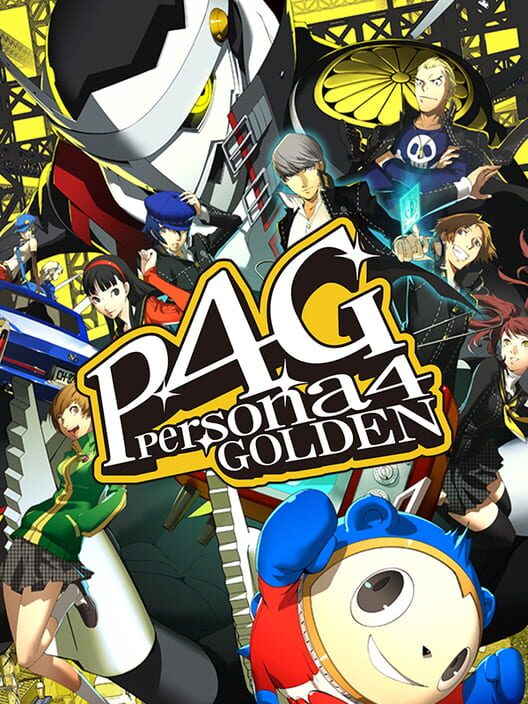
On one level, Persona 4 Golden is a great choice for a lunchtime game. An hour is a perfect amount of time to either crawl through a few levels of the current dungeon, or pass a few in-game days advancing Social Links, boosting characteristics and fusing new Personas. That means every session feels meaningful and productive, because I can set a reasonable goal and work towards it over the course of a lunch break. On another level, it is a terrible choice for a lunchtime game, because it's around eighty hours long. As a result, I'm pretty sure that even after spending eight months slowly chipping away and making progress, I'm probably only about halfway through the game.
Overall I feel I made decent progress with Persona 4 Golden in January. My Backloggd journal shows I managed eight lunchtime sessions with the game, averaging two sessions per week. On the main story side of things, that time was spent gaining access to, and then ascending, the game's fourth proper dungeon, the retro-game-themed Void Quest. I was hoping to defeat the boss at the dungeon's final level before the end of the month, but as it transpired I fell just short of that goal, reaching the "endgame" floor of the dungeon in my final play session of January but running out of time to challenge the boss itself. The rest of my play time was spent going back through the Marukyu Striptease dungeon in order to take on its optional boss, and cultivating the Social Link relationships with party members and other NPCs that contribute towards being able to fuse stronger Personas for combat. I am a little... mixed on Persona 4's Social Links, something that I'll touch on in more detail when I eventually finish the game and dedicate a proper write-up to it. For now, I'll say that as a thirty-five-year-old man, I don't think I'm the target demographic for that aspect of Persona 4 Golden, and leave it at that.
The Witcher 3: Wild Hunt
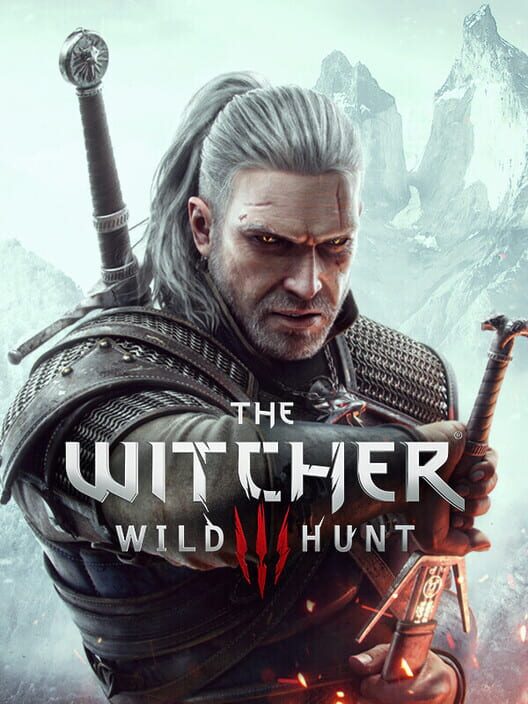
One full month into 2026 and I fear I may have let off the gas a little more than I intended. In December I played a little of The Witcher 3 almost every day, and I was able to make my way through the entirety of the first act of the game's story and a decent chunk of its early-game side-quests. I even double-dipped and purchased the Switch port of the game on a deep discount just before Christmas, so that I could take advantage of its cross-progression save feature and continue my play sessions in the comfort of my bed when my wife was busy watching stuff on our only TV. In January, I only managed five logged play sessions with The Witcher 3 across the whole month. This is undoubtedly because I decided to place most of my attention elsewhere. Firstly on Metroid Prime 4, which won out both due to having that "new hotness" factor and also because of my desire to actually roll credits on something, anything, in the first month of a new year. But since Prime 4 was a Switch title that I played mostly in handheld mode, and I'm playing The Witcher 3 predominantly on the PS5, there still should have been plenty of opportunity to make some advances with Geralt's adventures. Well, my PS5 game time also got usurped by a different title, which I'll be talking about very soon. As a result, The Witcher 3 ended up becoming my third-line game for most of January.
The little progress I did make in January was at least significant from a story perspective, returning to the witchers' keep at Kaer Morhen to lift a curse from a creature fittingly titled "the ugliest man alive" and learn the whereabouts of the missing Ciri. Following this development in the main quest I was cast back out into the open world and tasked with gathering allies to return to Kaer Morhen for an impending battle with an otherworldly force, a task that has so far largely gone unfulfilled in favour of completing outstanding witcher contracts, tracking down diagrams for specialised witcher gear, and of course, playing Gwent. In true RPG fashion, I anticipate that recruiting all of these allies to the cause is tied to completing some prerequisite side quests in order to earn their loyalty, and so I suspect I'll be focusing on those as we head into February.
Hollow Knight

And then, the PlayStation Access game club happened.
For anyone reading this who's not aware, PlayStation Access is the official YouTube channel of PlayStation UK. Their output typically focuses on new and upcoming releases, challenge streams and excellent "Friday Feature" deep-dives into different aspects of playing video games. It's not hard-hitting journalism, it is largely just one big advert for PlayStation, but I enjoy it nonetheless, in the same way I enjoy comfort food. One of PlayStation Access's regular features is a podcast that releases every other Saturday, and it's probably my favourite thing that they do; I love listening to the channels' different personalities wax lyrical about the games they enjoy and the topics that they choose to explore through these more casual conversations.
On Saturday 10th January I opened up my phone's YouTube app, hit play on the latest episode of the PlayStation Access Podcast, and was knocked sideways by the announcement of a book-club style feature focusing on games available to play on the PlayStation Plus Premium tier. I was then promptly knocked back the other way by the follow-up announcement that the first game they would be playing was Hollow Knight. The idea of a "video game book club" is an incredibly appealing one to me, and here is one that I can get right in on the ground floor of, and with a game that is already in my library and my backlog, no less. In that moment I made a decision, downloaded Hollow Knight onto my PlayStation 5, apologised profusely to The Witcher 3 for the neglect I knew I was about to inflict upon it, and began my journey into the dark and mysterious world of Hallownest.
At the time of writing I'm about twelve hours into Hollow Knight. So far the aspects of the game that have stood out the most to me are its atmosphere and its focus on exploration and discovery. While my experience with the Metroidvania genre is fairly limited, I don't think any of the others that I've played do exploration as well as Hollow Knight does. The way the in-game map is implemented and updated is fantastic, the level of detail on the map perfectly highlights where the dead ends are and where there's still uncharted areas to explore, and the interconnected world design of Hallownest leads to some incredible moments of discovery (my personal highlight in this regard was when I explored a new area, picked up a movement upgrade, used it to exit the area, and found that it connected directly back to the main hub area). It's a bit difficult for me to get into specifics for fear of spoiling anything, since exploration and discovery are very much this game's bread and butter, but I will say that I've just had three important locations marked on my map, and so I assume my next primary goal is to reach those three locations and find out what's happening at each of them. Even at this early stage I'm getting the feeling that this is an incredibly special game, and I'm very excited to continue playing (and hopefully finishing) it in February.Gran Turismo 7
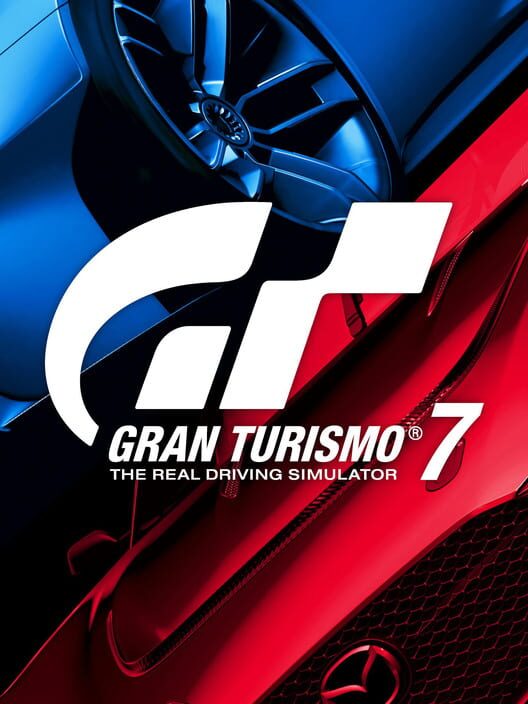
I picked up Gran Turismo 7 in the spring of 2024, played it for about an hour, completed the first few menu books of its single player mode, and then put it down. I know this because when I picked it back up, all my progress had been saved on the server side, and no amount of trying to reset and start from scratch would work. This is a major downside for me, because I was one of those kids who loved starting a fresh career mode save in Gran Turismo 4 over and over again, picking different cars from the used car dealerships and seeing what paths I could use them carve through the early game events. There is no option to do this with GT7; your single player progress is indelibly stored on Sony's servers and cannot be reset or overridden without creating an entirely new PlayStation Network profile. Not that there'd be much variety to repeat playthroughs anyway, since the single player structure dictated by the game's menu books results in a far more guided and far less personal play experience. That is, thankfully, the only bad thing I can say about Gran Turismo 7 off the back of my fifteen-ish hours with it over the past fortnight. The driving model is fantastic and makes even the early 100-horsepower FF hatchbacks fun to drive, the AI opponents feel far more intelligent than anything I remember racing against in previous GT games, and the visuals are absolutely peerless in that quintessentially Polyphony Digital way. I swear these games have seemed photo-realistic for the past twenty years at this point, and yet they still manage to keep making them look even better.
I think part of what has kept Gran Turismo 7 in regular rotation for the past two weeks is that it's fairly easy to pick up and play. At the relatively early stage of the single player mode in which I still currently find myself, all of the available events and challenges require a low time investment, so it's a cinch to hop in and out of races as and when I get a fifteen-minute opportunity to do so, whereas titles like The Witcher 3 and Hollow Knight demand that you sit down with them and give them your full attention for a much longer play session. The rewards also come thick and fast in the form of new cars to drive and new tracks to race on (again, at least in the early game), so there's a constant positive feedback loop which keeps me wanting to come back for the next dopamine hit. Finally, when set next to The Witcher 3's mature themes and graphic violence and Hollow Knight's fear-inducing atmosphere, Gran Turismo 7 is an almost wholly inoffensive alternative. That's something that I wouldn't have factored into my decisions about what to play a few years ago, but now that I have a two-year-old son who is starting to sit up and take notice of what's happening on the TV screen, it is imperative that I have the option to play something that isn't going to give him nightmares, and GT7 fits that niche perfectly.
Looking Ahead
With January now in the rear view mirror, it's time to start thinking about how I'd like February to look from a gaming standpoint. With five games already on the go in some form or another, I feel like the most sensible option is to focus on those rather than trying to bring anything new into the mix. I anticipate Hollow Knight will remain my primary game on the PS5 for at least the first half of February, and is probably the game I stand the best chance of finishing this month out of everything that's currently in progress. Now that I've finished Metroid Prime 4, I plan to make The Witcher 3 my main Switch game; this will allow me to keep making steady progress on evenings when I don't have access to the TV, and lift some of the pressure I felt through January trying to juggle the demands of both it and Hollow Knight on the same hardware. Persona 4 Golden will remain my lunchtime game, squeezing in a couple of sessions each week, and I also intend to keep up my weekly ritual of a match of Cricket 24 every Sunday. That just leaves Gran Turismo 7, which I plan to play a little less of in the upcoming month; while I've enjoyed the time I've spent with it overall, I do feel like I've allowed it to take my attention away from the games on my "to-do" list a little too often.
Something which I haven't mentioned up to now is that I am currently in the middle of a playthrough of the entire Tomb Raider franchise, having played through the Remastered versions of all six CORE-developed titles in the past two years. My aim for this year is to make it through the first three Crystal Dynamics games; Legend, Anniversary and Underworld. I've played Tomb Raider: Legend twice before, and if my memory serves me it's incredibly short, clocking in at around six or seven hours for a full playthrough. I'm therefore planning to keep it in my back pocket as a potential late February game. That way, if I reach the last week of the month and I haven't managed to tick anything else off my "to-do" list, I can turn my attention to it and clear it from the backlog with confidence.
...I also just remembered that the PlayStation Access game club (official name still to be determined as I'm writing this) will be featuring a new game for February as well, and I'm going to wager the chances of it being anything I'm already playing are incredibly slim. Ah well, I'll just have to cross that bridge when I come to it.
That's going to do it for this very first edition of the Backlogbook. I'll be back at the very start of March to check in and see how much progress I manage to make in February. Until then, I hope everyone reading this is enjoying whatever you're playing. Thanks very much for reading, take care, and I'll see you around.
Comments
Post a Comment